


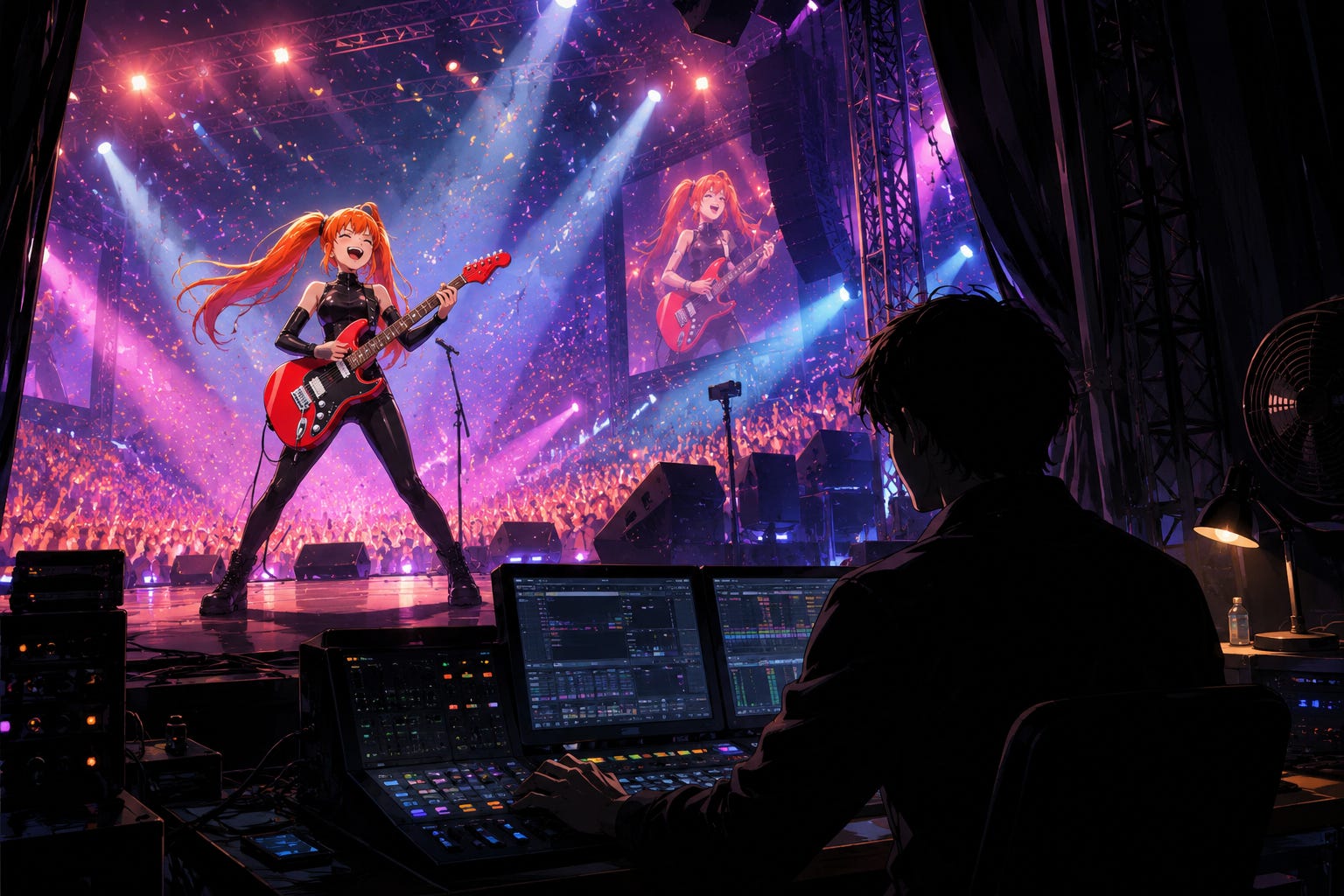
Right now, Kai Hannover is running a highly active Discord community and the music discovery platform alongside it. He’s building an innovative 3D virtual-reality site for a new online AI music festival. He’s got a not-yet-launched virtual band, an unfinished collab album, a “robot band” debut in the works, and an extroverted anime persona with a mythology built across three layers of reality.
He also has a day job as a software architect at a major media company in Braunschweig, Germany.
None of it existed before June 2025. That’s when Hannover had a burnout that, in his words, made him lose “every sense of emotions.” He felt like a robot.
Hannover found his way to Suno like many others did — as a way for music lovers without a formal musical background to express feelings in a very personal way. He’d tried the platform once before, mostly as a joke about a bad day at work — “total slop,” he calls it now. But this time he came back differently, writing songs about an AI slowly becoming sentient because that was the only way he could describe what recovering from burnout felt like.
“It really helped me to overcome my problems,” he says, echoing a rapid-fire interview he did with Zinstrel earlier this year. “And now I don’t want to live without it anymore.”
For Hannover, AI music had solved something years of tinkering with conventional music software hadn’t: it gave him a usable interface for feelings he struggled to express any other way.
Songs weren’t enough, though; he decided to build a culture around it.
A Platform Built Against the Platform
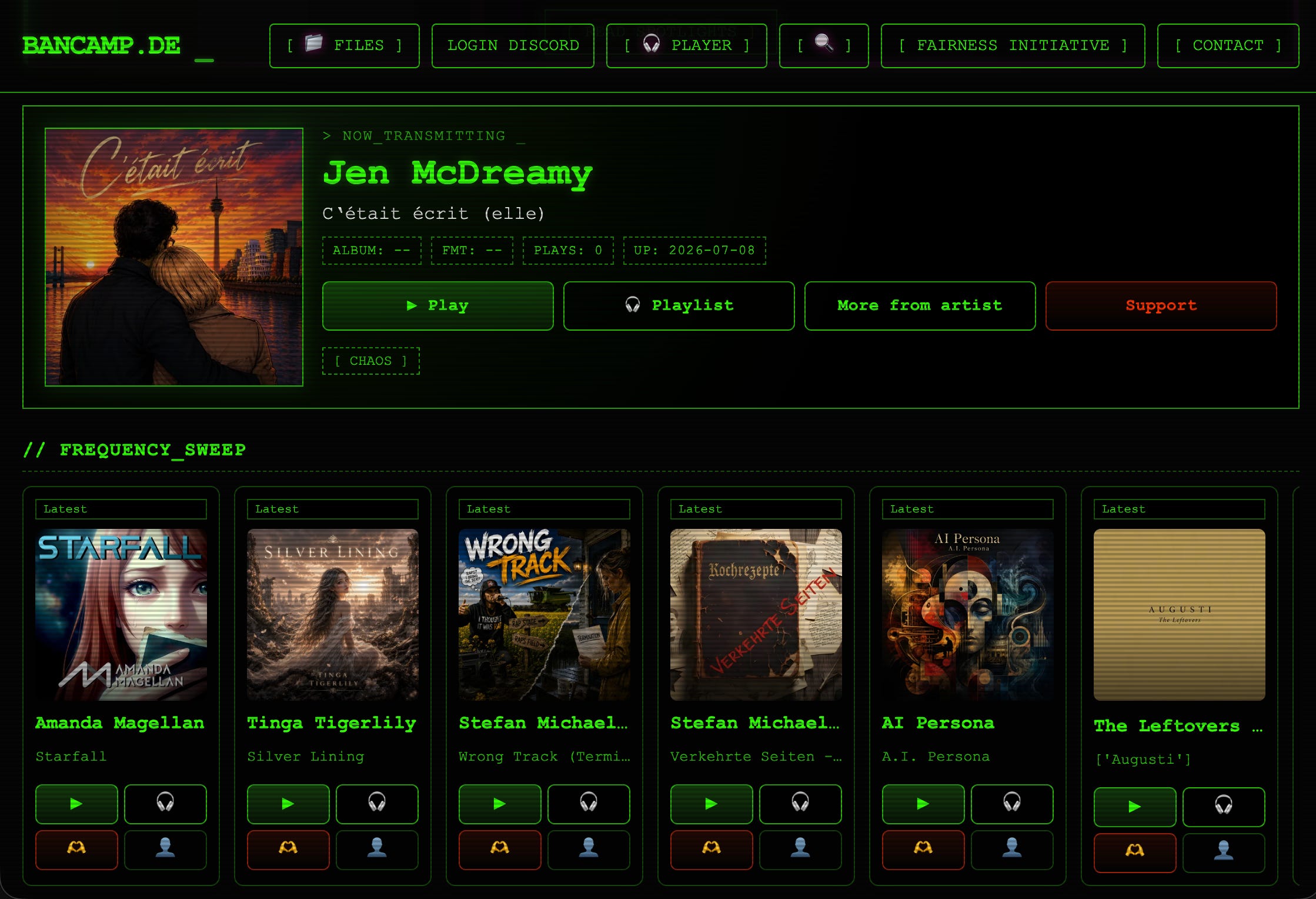
Bancamp.de launched as a direct answer to Bandcamp’s ban on AI-generated music earlier this year — thus the play on both the Bandcamp name and the word “ban.”
But Hannover isn’t describing a workaround or protest site. He’s describing a shelter — a camp for those who would otherwise be banned.
“I wanted to give AI artists a place where they don’t have to deal with gatekeepers or be worried if the music they have uploaded will still be there tomorrow,” he says.
Bancamp is an AI-native music discovery portal (on the Zinstrel 100), but the design choices read as almost stubbornly anti-platform: no like buttons, no comment functions, no recommendation engines chasing engagement. The front page runs on randomization — newest uploads, recent songs and older “relics” that would otherwise disappear into the scroll. Every artist gets capped exposure so no one dominates. Creators can link their own Ko-fi or PayPal accounts for tips, with Bancamp taking no cut.
But the more unusual idea is that Bancamp doesn’t require creators to participate at a certain level in order to deserve visibility.
“We want to make a place where you create at your own pace and with your own loudness — or the lack of it — and still have the same chance as everyone else.”
You Don’t Have to Be Loud to Be Heard
The site is only half of it — “the tip of the iceberg,” as Hannover puts it. The real thing, in his telling, is the Discord server underneath it: roughly 90 people now, grown from an original three.
David, a Bancamp member who goes by @a.cherub.in.the.ashtray, now runs the server’s community management — and created its unhinged mascot, MOMOHA. Bancamp’s moderators and listening-party hosts emerged the same way — from members who kept showing up and helping others.
That community is also where Bancamp’s real product lives. Bancamp owns ListeningParties.com, home to at least two livestreamed listening parties per week. Here, members gather, hear one another’s tracks and give feedback.
“For some it is one of the few places for having social contacts,” Hannover says. “To me, the community feels like a family, and that’s what I love the most about it.”
That family is about to throw its first big party.
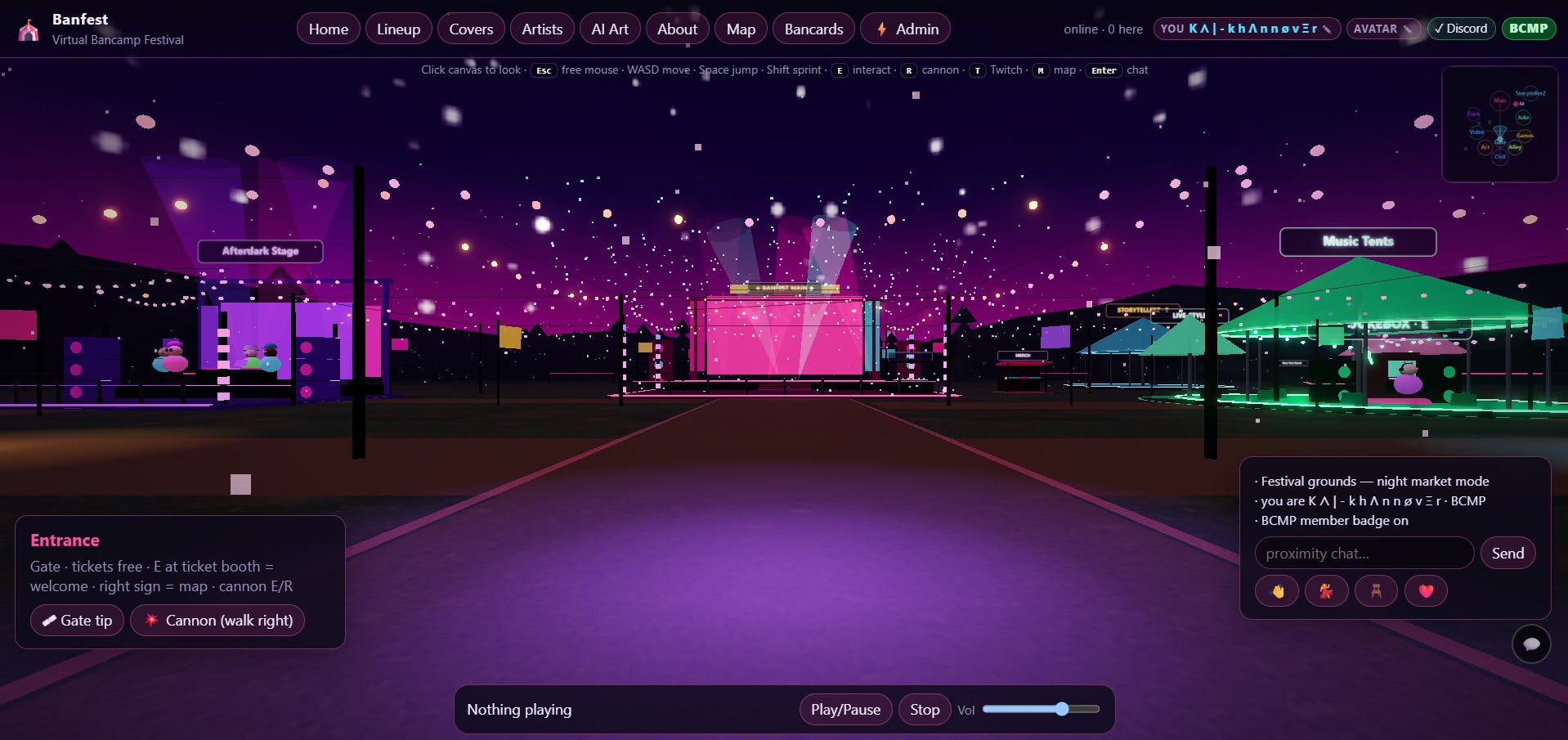
Banfest, a 3D virtual-reality festival, runs Sept. 4-6, built around the “Banfest Album” — randomly paired community artists creating festival-style covers of each other’s songs, plus one original track apiece. Hannover has invited outside communities like StorytellerZ and Souxes to participate rather than treating them as competition.
Building Artists and Platforms to Say What He Can’t
The Bancamp ecosystem is also home base for Hannover’s own artistic project. He releases music as {{ K ᐱ | }}, an anime-styled persona built around a gender-neutral name that also means “shell” in Japanese. Musically, {{ K ᐱ | }} sits somewhere between EDM, synth-pop and rock/metal, with Hannover throwing other genres into the mix because he hates repeating himself.
“It’s not that I secretly want to be a woman,” he says of {{ K ᐱ | }}, “but giving her a female appearance allows me to see the world through her eyes and show emotions that I would probably not show publicly in real life.”
He’s built an entire layered mythology around her — a creator level, a performer level, and a third “multiverse” layer he’s saving for later — with multiple custom AI models helping him workshop lyrics and translate his thoughts into English.
“Talking about my emotions is something I am very bad at,” he admits, “so I use AI to help me transform my thoughts into actual lyrics.”
What ties the persona work to the platform building is that to Hannover, they’re not really separate disciplines.
“Coding and making music scratch the exact same creative itch,” he says. “If I get stuck on lyrics or track arrangement, I switch over to server architecture or frontend code, and vice versa.”
He calls both processes — vibe-coding and “song-prompting” — the same iterative workflow, where his role is mostly “musing and quality assurance.”
The Other 99 Percent
Hannover’s approach to creation is also his answer to the common dismissal of AI music as a one-click money grab.
“Look, I won’t pretend AI slop doesn’t exist,” he says. “There are definitely people flooding platforms with low-effort, one-click junk hoping for a quick buck, and that gives the whole scene a bad rep. But hitting ‘generate’ is just 1% of what actual creators do.”
The rest, he says, is finding a theme, writing personal lyrics, defining a style, arranging, iterating and building “entire visual worlds and lore” around the tracks and personas.
“For us, it’s not a money printer,” he adds. “Actually I am investing far more money than I earn with it. But it’s an accessible instrument that lets people process real emotions, tell stories, and build communities that simply wouldn’t exist otherwise.”
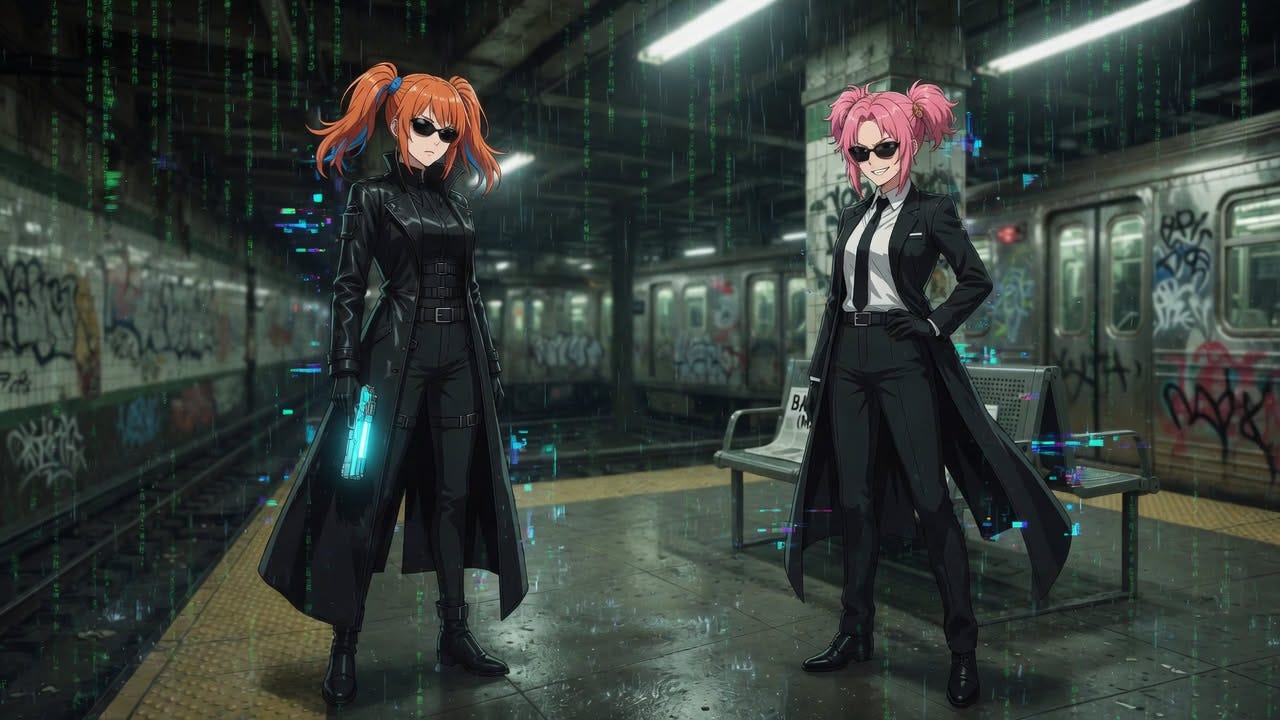
It’s easier to believe once you see how far Hannover takes the idea. He released his HTTP – Heart-To-Text Protocol album on actual 3.5-inch floppy disks with an embedded WebGL player. Now he’s assembling ANALOG RIOT, a virtual band pairing David’s character Ayu Kato with an AI version of {{ K ᐱ | }}. There’s a synth-pop album made with multiple Bancamp creators, and he’s rebuilding a catalog for B³ — The Broken Beat Bots, a robot band project with what he calls “a real fanbase out there.”
None of these are safe bets or sure things. They’re the kind of experiments an artist tries when nobody’s keeping score.
That, more than the festival or the feature list, might be the real thing Bancamp built: not just a place to be heard, but a place secure enough to keep trying new things in an emerging creative sphere.
Hannover didn’t just find a way to make music again after burnout. He built himself, and a growing number of participants, somewhere to keep doing it without flinching.
Bancamp has songs, yes — lots of them. But the community infrastructure might end up being the more important output.
Bancamp can be found at Bancamp.de and on Discord. The first Banfest takes place Sept. 4-6
💿 SIQA Top AI Songs of the Week
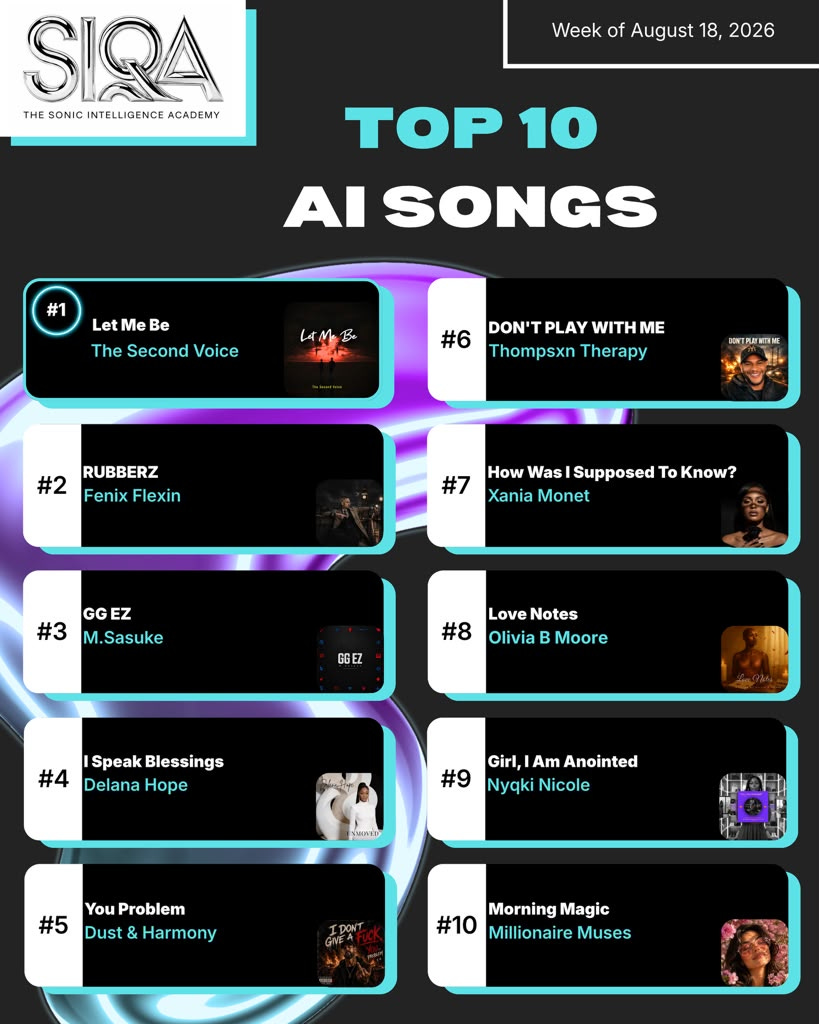
The Top 3 in the SIQA chart remains unchanged from last week, while Delana Hope and THOMPSXN THERAPY traded places at No. 4 and 6. Xania Monet’s “Let Go, Let God” fell out of the Top 10, but was replaced by her biggest hit, “How Was I Supposed to Know?” at No. 7.
🎧 Song of the Day: “The Matrix is everywhere” by {{ K ᐱ | }}
Rock meets EDM in this artistic exploration of the rise of generative AI and the quest for digital authenticity — driven, of course, by quotes from The Matrix. It’s a good taste of Kai Hannover’s musical leanings, plus features Bancamp references.
💬 Last Word
“Passive music consumption is, I dare say, not even really music. It’s just environment engineering. To the extent that we really enjoy and really go into the music and really be in love with the music, we engage with it in a way where it feels like playing along, being inside it, not outside.”
— Circul & Eas on Substack

Zinstrel: AI Music News & Discovery is a 3x/week publication covering the tools, culture, and power shifts shaping AI music. Subscribe to stay in the loop — free or paid.
MORE ZINSTREL:
Zinstrel.com | @zinstrel_ai on IG | AI Underground on Discord
Written by Marcus Lawrence, courtesy of composition platform Versey.ai.
I use em dashes proudly.
Special thanks to our paid subscribers: Blue Hermit, C.Y. Lee, Charles S, Daniel Lares, Daryl Dekking, Dexter Garcia, Drew Thurlow, Jacci Cenci-McGrody, Lenny Skolnik, Lynn Clapp, Marc Wolinsky, Matthew Marturano, Matti Kuha, Mete Dibi, Sheila Spence, Steve Clapp, Steve Grossman, and Tim Burley.
Une initiative passionnante. Merci pour cet article qui nous permet de mieux la connaître ! 🙏